Monday, 23 January 2012

Bottle Wreck gets gold


Hammerpot Brewery is delighted to announce that their “Bottle Wreck Porter” has been awarded GOLD in the Porter category at Campaign for Real Ale’s (CAMRA) 2012 National Winter Ales Festival in Manchester.


The beer, named after a 19th century shipwreck off the coast of Sussex found to be carrying hundreds of bottles of porter, was first brewed in 2007. Since then it has won many Beer of the Festival prizes and four regional awards from both CAMRA and the Society of Independent Brewers (SIBA). Although several of their other beers have also won awards, this is the first national award to be received by the brewery.
Lee Mitchell, the head brewer at Hammerpot Brewery said, ‘Despite not being driven by awards it is very nice to be recognised and it reflects the efforts of the whole team here.’


Based in Poling, near Arundel, West Sussex , Hammerpot Brewery was established in 2005 by Lee with the intention of producing distinctive, quality craft brewed beers. They now produce at least 12 different beers throughout the year and continue to pursue those same aims.
With their small 5 barrel brew plant Hammerpot Brewery are a micro brewery in the truest sense and are delighted to be able to show that smaller end of the independent brewery sector can make great beers worthy of national recognition.

Wednesday, 11 January 2012

Bottle Conditioning: Living Beer explained

The term "living beer" can be either high praise or a slap in the face for a brewer. If the things that are "living" in the beer are microorganisms that ought not to be there, then it is bad news for a beer and its brewer.
Live beer, however, generally refers to the presence of noble yeasts left over from the brewing process. Beers that have been bottled unpasteurized and unfiltered, with a significant amount of live yeast, are called "bottle-conditioned" beers. The purpose of bottling beers in such a manner is to give them the potential to age and develop more complexity. Yeast inhibits oxidation and contributes complex flavors as it breaks down slowly in the bottle. Many Belgian ales are traditionally bottle conditioned through a secondary fermentation in the bottle, in a process similar to that which produces champagne.
An unpasteurized beer bottled with its yeast will not age in the manner of a conventionally processed beer. With age, bottle-conditioned beers develop a rounded, smoother mouthfeel, and over the course of years, often take on winey, vinous flavors.
Bottle conditioning is an economical means for small-scale craft brewers to bottle ales without the need for costly pasteurization or filtration equipment. How long one cellars bottle-conditioned beers is a matter of personal taste and will also depend on the specific character of the beer in question.
[courtesy of http://www.tastings.com/bti/about_bti.html ]

Thursday, 5 January 2012

Seven days to save the pub!


We need your help to persuade your MP to support a fair deal for pubs tied to the large pub companies. This important issue is being debated and voted upon in Parliament on Thursday 12th January and we need your MP's support.Please take 2 minutes to email your MP. The pre-written email asks your MP to VOTE FOR a Parliamentary Motion asking the Government to introduce meaningful reform of the large pub companies. Please take 2 minutes
to email your MP
The Government has recognised the existence of "unfair practices" in the relationship between the large pub companies and their licensees along with the failure of the pub companies to deliver meaningful self regulation. The unfair practices adding pressure to many pubs include excessively high tied prices, unjustified rent calculations and misrepresentation. These unfair practices result in higher consumer prices and unnecessary pub closures.

Following years of campaigning by CAMRA, MPs, small business groups and many others the Business Minister set out proposals for self regulation last November. Unfortunately, these proposals have been widely castigated as naive, unenforceable and insubstantial. The Parliamentary Business Select Committee has secured a vote in Parliament in an attempt to force the Government to toughen up its approach.

This Government gave a clear commitment that failure by the pubcos to self regulate would result in robust Government intervention. Please help us to hold the Government to its word by asking your MP to vote in favour of the Parliamentary Motion on pub company reform being debated by MPs on Thursday 12th January.

Email your MP now.

Thank you for your ongoing support.

Wednesday, 4 January 2012

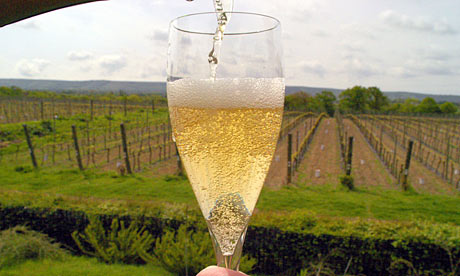
English sparkling wine comes of age with French boost


English champagne from grapes grown on the South Downs in East Sussex
Dramatic growth reported in demand for UK champagne-style wines on eve of release of first English fizz by French maker. [ guardian.co.uk, Sunday 25 December 2011 21.20 GMT] 

Carr Taylor mixed case of English sparkling wine as an example of excellent UK-style Champagne 
 
English champagne from grapes grown on the South Downs in East Sussex. Photograph: Andrew Hasson/Alamy
The first English sparkling wine made by a French champagne maker is about to go on sale, providing the clearest sign yet that British fizz is coming of age.
Meonhill, made from grapes grown from French rootstocks planted in Hampshire, will be available early in 2012.
Until now French wine makers have not invested in cultivation of the grape in Kent, Sussex and Hampshire – places closely resembling the climate and chalky geology of northern France.
The planned release of the first 5,000 bottles by Didier Pierson-Whitaker, owner of a grand cru vineyard in Champagne, comes as established English vintners of champagne-style sparkling wines report a dramatic growth in sales and demand.
Waitrose says sales of 18 English sparkling wines have risen by almost a third compared with last Christmas, and Ridgeview, a wine maker in the South Downs, reports trebled sales in the last two years.
Marcus Waring's recently opened London restaurant, Sir Gilbert Scott, is now selling more glasses of English sparking wine than Moët et Chandon, the Champagne region's biggest global brand.
"Demand is outstripping production and we can't keep up," said Mardi Roberts, sales manager at Ridgeview, in Sussex, which last month won best sparkling wine in the 2011 International Wine and Spirit Competition. "Exports have been a real growth area and now represent 20% of our sales to places like the US, Finland, Japan and Hong Kong."
Cultivation in the UK of the three grape varieties used to make traditional champagne-style sparkling wine – Chardonnay, Pinot Noir and Pinot Meunier – has more than quadrupled since 2005, according to data held by the Food Standards Agency.
The grape varieties now grow across 550 hectares (1,235 acres), more than half of the space that is devoted to vineyards. Farmers are catching on and four parcels of arable land at Barham Court, in Kent, that until now were planted with cereal crops, are being sold for use as a sparkling wine vineyard.
Meanwhile, Waitrose this autumn pressed the first grapes from its own newly planted vineyard in Hampshire to make an own-brand sparkling wine that will be ready for drinking in 2013 or 2014.
"When I first put English sparkling wine on my wine lists five years ago, people were scared," said Mark Cesareo, head sommelier at the Sir Gilbert Scott, which stocks three English sparklers. "The people who were most averse were the English themselves while tourists and even French people wanted to try it.
"Now I stock three English wines by the glass, Gusbourne, Ridgeview and Nyetimber. If I sell 10 cases of Moët week, I will do six of Gusbourne, five of Ridgeview and three of Nyetimber."
Some wine makers, however, admit to difficulties operating in the UK's nascent wine industry.
"Truthfully, it has been tough," said Imogen Pierson-Whitaker, who is behind the Meonhill wine. "We don't have the massive support system you have in France. We planted in 2005 and the vines have been fabulous some years and there have been poor years. There is a bit of an issue with the wind, but that can help prevent mould. It will obviously evolve, but the beginnings are tough, especially when you are using a new vineyard." Roberts said: "There is possibly a bit of a gold rush going on. There are a lot of people planting at the moment, but people underestimate the cost of producing the wine. We have put in a lot of effort in to get the standard up and we are conscious of the need to keep it there."
Coates and Seely, which makes sparkling wines in the north Hampshire downs, emblazons "Britagne" on the gold foil of its bottle necks and has suggested that other sparkling wine producers do the same to protect standards.
Christian Seely, former managing director of Axa Millésimes, which owns Château Pichon-Longueville and Château Suduiraut, both celebrated Bordeaux houses, wanted the name to stand for a specific "methode brittanique" of vinification. Ridgeview has trade-marked the word "merret" to describe its English sparkling wine. In 1662 Christopher Merret presented a paper to the Royal Society in London which outlined the process of making traditional sparkling wines. This was, Ridgeview says, 30 years before the technique was documented in Champagne.
Carr Taylor mixed case of English sparkling wine as an example of excellent UK-style Champagne

Friday, 16 December 2011

Polypins for parties

Ironbridge Brewery's Christmas Special. Four Candles features four malts and benefits from four hop additions and is 4%. Named after the four candles of advent it’s not to be confused with “handles for forks”. 
Appearance: Chestnut brown with a thick, off-white head.
Hops: Galena, First Gold, Crystal
Malt: Maris Otter, Cara, Crystal and Malted Wheat


20 Litres = 35 pints

Other ales in polypins from Ironbridge Brewery are Centennial (4.3%) This golden ale started out as a one off special as part of our single hop series.
Single hopped with the superb U.S. Centennial hop. Lots of hop character, tons of flavour.
Wenlock Stout (5.1%)  Wenlock Stout is a 5.1% traditional stout. The initial dry character is followed by a satisfying smooth finish.
Appearance: Deep garnet black, off-white head.
Hops: Centennial and Cascade
Malt: Careful blend of pale, chocolate, crystal and roast barley

Wednesday, 14 December 2011

Green Jack Brewery's very fine ales


Green Jack Brewery, a multi-awarding winning traditional real ale brewing company based in Lowestoft, Suffolk and are headed up by master brewer Tim Dunford. From modest beginnings Green Jack have now grown to one of the largest real ale breweries in East Anglia, with our new purpose built brewery in Lowestoft beginning production of our award winning real ales in early 2009. Beers with a contemporary take on traditional styles.

A mixed case of 2 each of the bottle conditioned ales including;  
Mahseer IPA (5%, 500ml); An India Pale Ale as it was always intended to be, strong bitter and very hoppy! Our IPA has been Brewed with English bittering hops and American aroma hops, a winning combination! Named after the legendary Golden Mahseer, which is most highly prized fish a freshwater angler can catch! Growing to over 120lb in weight the mahseer inhabits the rivers of northern India.
Norfolk Black (4.8%, 500ml); A full flavoured, smooth Chocolaty Stout infused with a special blend of spices especially for Christmas.

Baltic Trader Imperial Stout (10.5%, 750ml fliptop bottles); An Extra Strong Export Stout. Smooth, rich and fruity with roasted coffee & vanilla flavours. If you havn’t tried it yet, you need to! Baltic Trader celebrates the North Sea sailing ships that traded between East Coast ports like Lowestoft, the Low Countries and Scandinavia.
Ripper Barley Wine (8.5%,750ml fliptop bottles); Champion Barley Wine. Inspired by Belgian tripel ales this multi-awarding winning brew is dangerously drinkable. Rich amber in colour Ripper is sweet and fruity with a warming finish
Gone Fishing ESB (5.5%, 750ml fliptop bottles); The Gone Fishing E.S.B.or “gone missing” as they call it in our pub, is a strong, deep amber coloured Ale, fruity and malty very drinkable for it’s strength.
Lurcher Stout (4.8%, 750ml fliptop bottles); Fruity, chocolaty, rich and fulsome, well-balanced with hops, yet So Smooth. Proving to be a real winner, if you like stout you will love Lurcher.

Tuesday, 18 October 2011

Upham Brewery beers now available


Upham Brewery is a family-run business, set in the rolling Hampshire downs, not far from Winchester. Our fine real ales are crafted in the grounds of a picturesque, seventeenth century farmstead by a small and dedicated team. We brew using traditional methods, which ensure the beer has great character, and use the best natural ingredients we can get hold of, to give our drinkers a proper pint, full of flavour.

Created under the expert guidance of a top brew-master, Upham Ale was our first tipple, and is still a winner. Since then, the brewery has gone on to create two further tasty tipples, Upham Nectar and Stakes Ale. Find out more about them here.

The business launched in early 2009 and it's been a busy time. We have a fast-growing distribution base, a very loyal drinkership and other plans in the pipeline. You see, some really do like it Upham…


Currently three delicious bottle conditioned beers.

UPHAM ALE

This is our first beer and still a firm favourite. Upham Ale has roasted malt flavours that mingle on the tongue with notes of chocolate and a pronounced, hoppy finish. 4% ABV.

UPHAM NECTAR
First brewed in summer 2010, Upham Nectar is a light, golden-coloured beer with a sweet, hoppy flavour that lingers over the malts. This is a real thirst-quencher with a lovely clean, dry finish. 3.8% ABV.

STAKES ALE
A chestnut-coloured beer, brewed for those who enjoy a stronger drink, Stakes Ale has buckets of flavour. Roasted malts and a hint of chocolate come to a hearty, hoppy finish. 5% ABV.